About
Commercial paving in Ottawa, planned around the lot
Grade, drainage, base condition and access decide the scope before the surface is discussed.
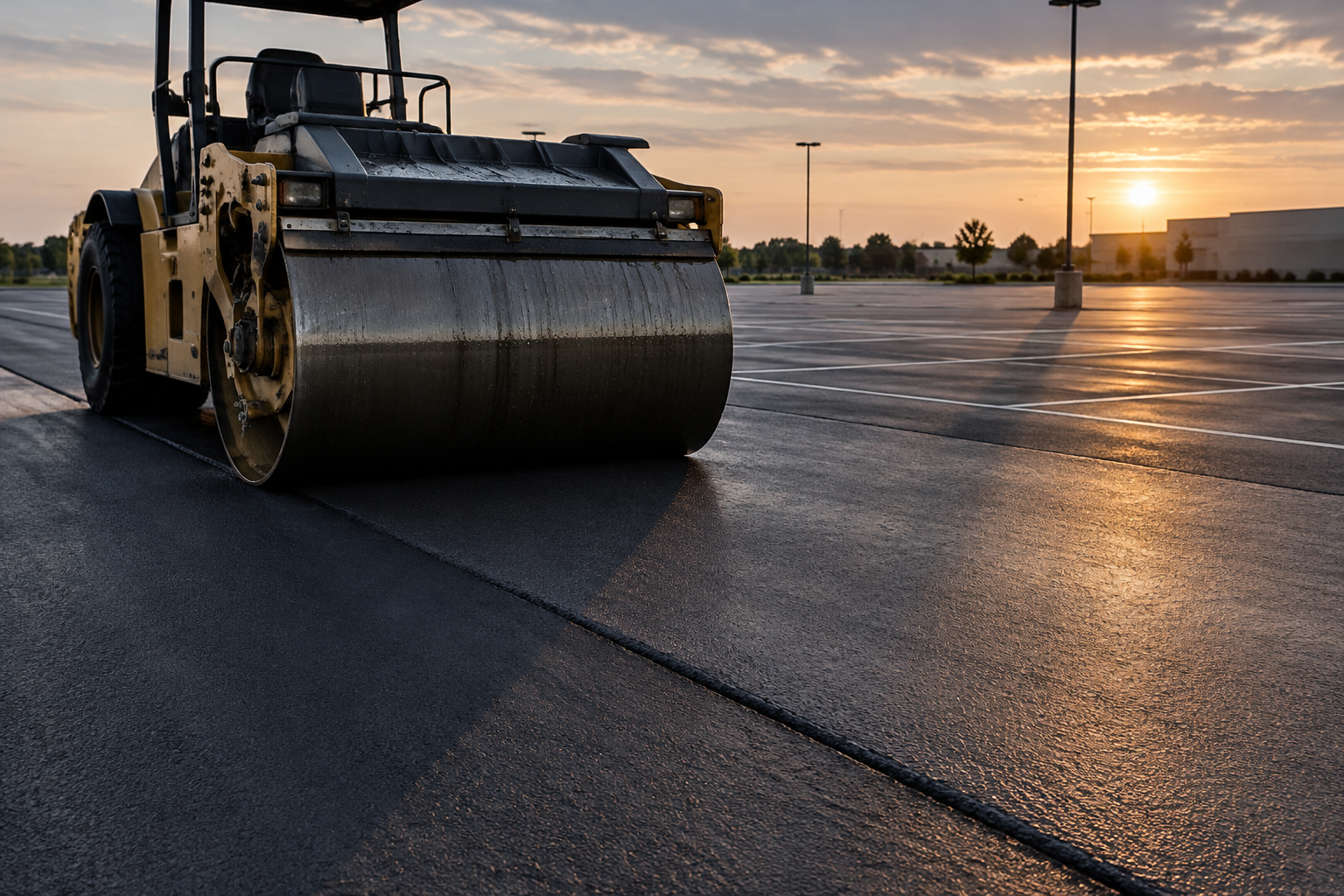
Commercial paving in Ottawa is not a single trade. It is a sequence of decisions about water, load and access, and the asphalt is the visible result of those decisions. This page sets out how we approach that sequence on commercial lots across the city.
01How a commercial lot is assessed
A commercial lot in Ottawa is judged the way a road is judged: by how it takes load and how it sheds water. The walk starts at the surface and works down. Cracking patterns say something about what is happening underneath. Alligator cracking in a wheel path usually means the base has lost its support. A long crack running parallel to a curb often points at an edge that has settled away from the concrete. A patch that has failed twice in the same square metre is not a patching problem.
Then come the parts that are easy to miss on a drive through. Where does the water go in a heavy rain, and does it reach a catch basin before it crosses a stall row. Are the basins sitting where they were set, or have they sunk into the asphalt around them. Does the lot slope away from the building and toward the drive aisle, or does it slope toward the doors. Is there a low point in the middle of the lot that holds a puddle for two days after a storm. Those answers decide more of the scope than the area does.
Access is the last piece of the assessment. A tandem axle has to be able to reach every part of the work, and a paver needs a run long enough to lay a straight mat. On a tight urban lot that changes the equipment, the sequence and sometimes the order of the sections. The assessment is not a sales step. It is where the plan is actually made.
02Grade and drainage before surface
Every lot was designed with a fall. The asphalt sits on that fall, and water is meant to leave the surface along it. Once a lot has been patched for a decade, the fall is often still there in the drawings but no longer on the ground: patched areas sit proud, settled areas hold water, and the basin apron has dropped.
Setting grade is the part of the work that has the longest effect. It means bringing the base back to a consistent plane at the intended fall, adjusting the low spots, and making sure the water arrives at the basin rather than at the base of a curb. On a reconstruction, that work happens before any asphalt is placed. On an overlay, it may mean milling out the high spots and levelling the low ones so the new surface does not inherit the ponding.
Drainage is a system, not a fixture. A catch basin that is clear but set too high does nothing. An apron that has broken away lets water run under the asphalt and into the base. We treat the basin, the apron, the lead and the fall of the lot around it as one piece of work, because that is how the water behaves.
03Freeze-thaw and plow traffic
Ottawa commercial lots spend part of every year frozen and part of it thawing. Water enters a crack, freezes, expands, and opens the crack a little more each cycle. A plow blade catching a raised edge will lift a section of asphalt in one pass. Salt and sand work at the surface and at the joints. That is the environment the work has to survive, and it is why edges, joints and drainage get as much attention as the middle of the mat.
In practice that means clean edges when a repair is cut out, a proper tack coat between lifts, compaction that closes the surface so water is not absorbed, and a crack sealing program that starts before the cracks are wide enough to hold water. It also means designing repairs so a plow has nothing to catch: flush patches, sound aprons, and edges that are tied back into the surrounding asphalt rather than left as a lip.
The winter takes a toll on any lot. What can be controlled is how much the surface lets that toll in.
04Scheduling around the paving season
Hot mix asphalt is a temperature sensitive material. It has to be produced at the plant, delivered, placed and rolled inside a workable range, and the base has to be in condition to receive it. In Ottawa that puts paving inside the warmer months, with the shoulder weeks depending on the weather and on plant operations.
Sealcoating has its own window. It needs warm, dry conditions and a surface that will cure, which usually means mid summer rather than the first warm week of spring. Crack sealing is often scheduled late in the season, when the cracks have opened and the surface is still warm enough for the sealant to bond.
Repairs and drainage work are more flexible, but they still need a dry surface and temperatures above freezing. The practical approach is to decide the scope over the winter, book the paving work into the season early, and keep the smaller maintenance items on a schedule that does not compete for the same weeks.
05Working in an occupied lot
Most commercial lots have to keep working while they are being fixed. Retail plazas cannot close the drive aisle in front of a tenant, office campuses need accessible stalls near the door, and industrial yards need trucks to reach a dock. The plan is built around those requirements from the start.
That usually means phasing the lot into sections, completing and reopening one before the next is cut, and keeping a marked route through the work area. Where a section has to cure without traffic, the timing moves to after hours or to a weekend. On tight downtown lots, night work with proper lighting is often the only way to get a paver and a roller into the space at all.
Signage, barricades and clear limits matter as much as the paving. A lot that is well marked is a lot that stays safe and stays usable.
About working with us
Short answers to the questions that come up before a site visit.
Neither is enough on its own. A measurement tells us the area, and a photo shows the surface. The base condition, the drainage fall, the catch basins and the access are what decide the scope, and those need a site visit.
Any time, for planning. Paving and sealcoating happen in the warmer months, but a walk in late winter or early spring is often the most informative, because that is when standing water, heaving and edge breaks are easiest to see.
You do. We plan the phasing around your decision. Some owners close a lot for a short window to get the work done in one pass, and some need a route open every day of the week. Both are workable, and the second one changes the schedule rather than the scope.
An overlay does not fix a base that is failing or a lot that drains to the wrong place. If the subgrade is moving or water is sitting under the surface, the new asphalt takes on the shape of the problem underneath and shows it again in a season or two.
Yes. Most of our work is arranged through property managers, facility teams and owners who need the scope, the phasing and the limits in writing before the work is scheduled.
Walk the lot with us
Send the lot details and we will arrange a site visit to look at the base, the drainage and the access before anything is proposed.
Or email
info@commercialpavingottawa.com