Service 07 / Crack sealing
Crack sealing in Ottawa
Cracks cleaned and sealed before water gets into the base and freeze-thaw widens them over the winter.
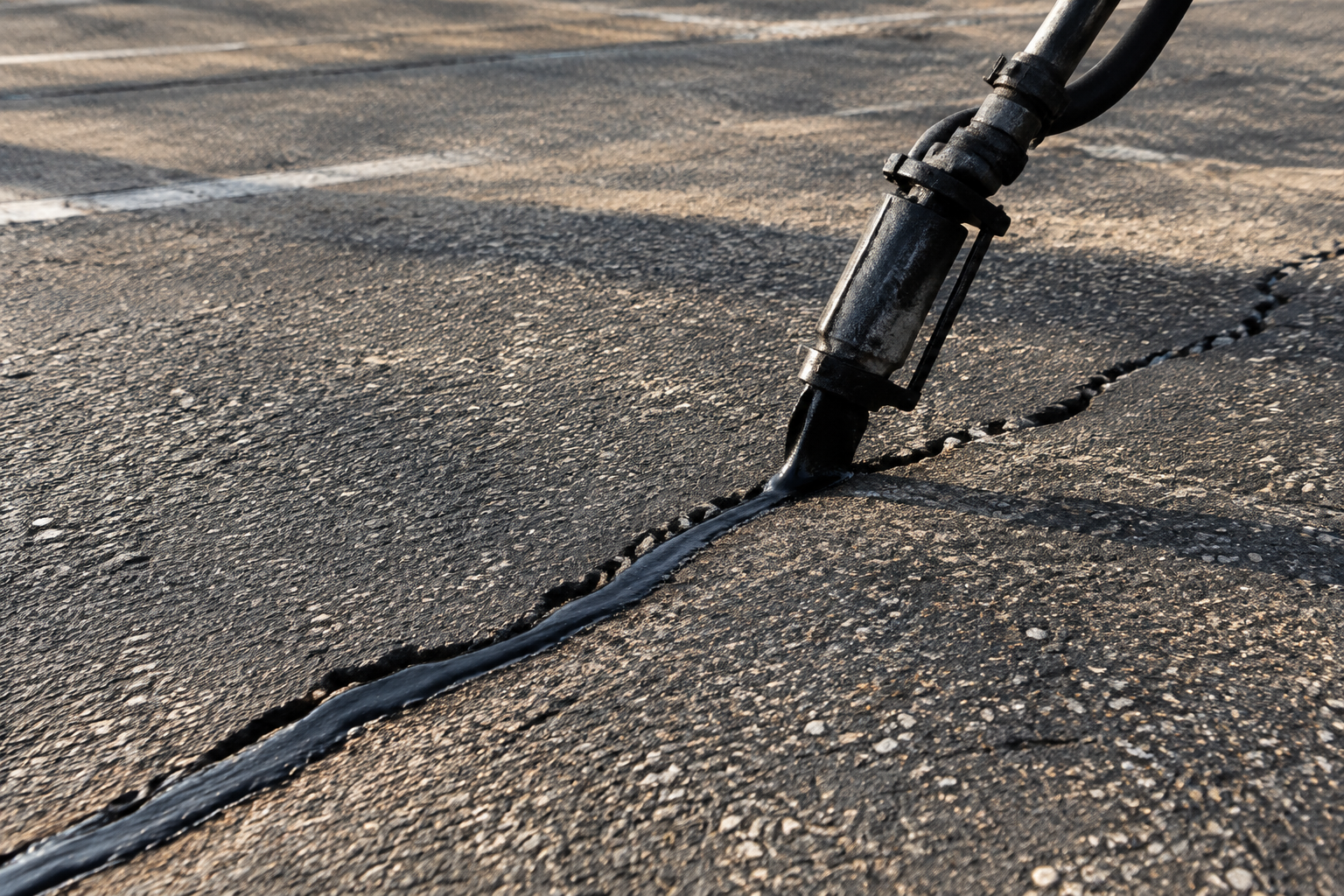
A crack in a commercial lot is a way for water to get in. Once water is inside the pavement and the base beneath it, freeze-thaw cycles do the rest. Crack sealing is one of the least expensive things that can be done to a lot and one of the most useful, provided it is done at the right time on the right cracks.
What is included
The cleaning is the part that decides whether the work lasts. Cracks are routed or cleaned out, blown clear, and dried before any material goes in. The sealant is then placed so it bonds to the sides of the crack and stays slightly proud of the surface, which lets it flex with the pavement instead of being pulled apart.
Working joints, edge cracks along curbs and islands, and the cracks that open seasonally across drive lanes are the usual candidates. Areas of alligator cracking are noted and reported, because those are a base problem and sealing them is not the answer.
- Routing and cleaning of open working cracks
- Drying before sealant placement
- Sealant placed to bond and flex with the pavement
- Edge and joint cracks along curbs and islands
- Failed areas noted and reported rather than sealed over
How the work is planned
Sealing is scheduled around the lot rather than the other way around. Cracks are worked in sections so that a route stays open, and the sealed areas are coned off until the material has set enough to take traffic. On a busy plaza, that usually means early morning or after hours.
Where a lot has both cracks and drainage problems, the drainage comes first. Sealing a crack in a section that still holds water buys very little, because the water is arriving from somewhere else.
Timing in Ottawa
Late season is the practical window. By then the cracks have opened to their widest, and the surface is still warm enough for the sealant to bond. Sealing in cold weather reduces adhesion and the work does not last the winter it is meant to protect.
Freeze-thaw and plow traffic
Every winter, water sits in an open crack, freezes, expands and opens it a little more. A plow blade crossing a wide crack can lift the edge beside it. Sealing interrupts that cycle at the point where it is cheapest to interrupt it. It does not stop cracking, and it does not restore a surface that is already failing, but it slows the rate at which a sound surface deteriorates.
Maintenance, not replacement
Crack sealing is maintenance. It keeps a lot in service longer and it makes the case for an overlay or a reconstruction later rather than sooner. What it cannot do is stand in for structural work where the base has already failed, and it is worth being clear about which situation a lot is in before the work is scheduled.
Crack sealing questions
The crack is cleaned out so the sealant can bond to the sides rather than sit on top of the dirt, then dried and filled with a flexible sealant. A crack that is filled with dust and debris will not hold the material for long.
Maintenance. It does not restore the structure of the pavement, and it does not fix the cause of the cracking. What it does is keep water out of the crack so freeze-thaw cycles stop opening it wider each winter.
Late in the season, when the cracks have opened and the surface is still warm enough for the sealant to bond. Sealing in cold weather reduces how well the material adheres to the sides of the crack.
Working cracks that are open and letting water in. A network of fine surface cracks is a different problem from a single wide joint, and alligator cracking across a wheel path usually means the base is failing, which sealing will not change.
No. It extends the time a sound surface stays sound. When a lot has reached the point where the surface is failing across whole areas, sealing individual cracks is maintenance on a surface that is already past that stage.
Start a crack sealing project
Tell us where the cracks are and how wide they have opened. That is usually enough to say whether sealing is the right step this season.
Or email
info@commercialpavingottawa.com