Service 03 / Resurfacing
Parking lot resurfacing in Ottawa
A new surface over a base that still carries load, with the overlay or rebuild decision made on evidence.
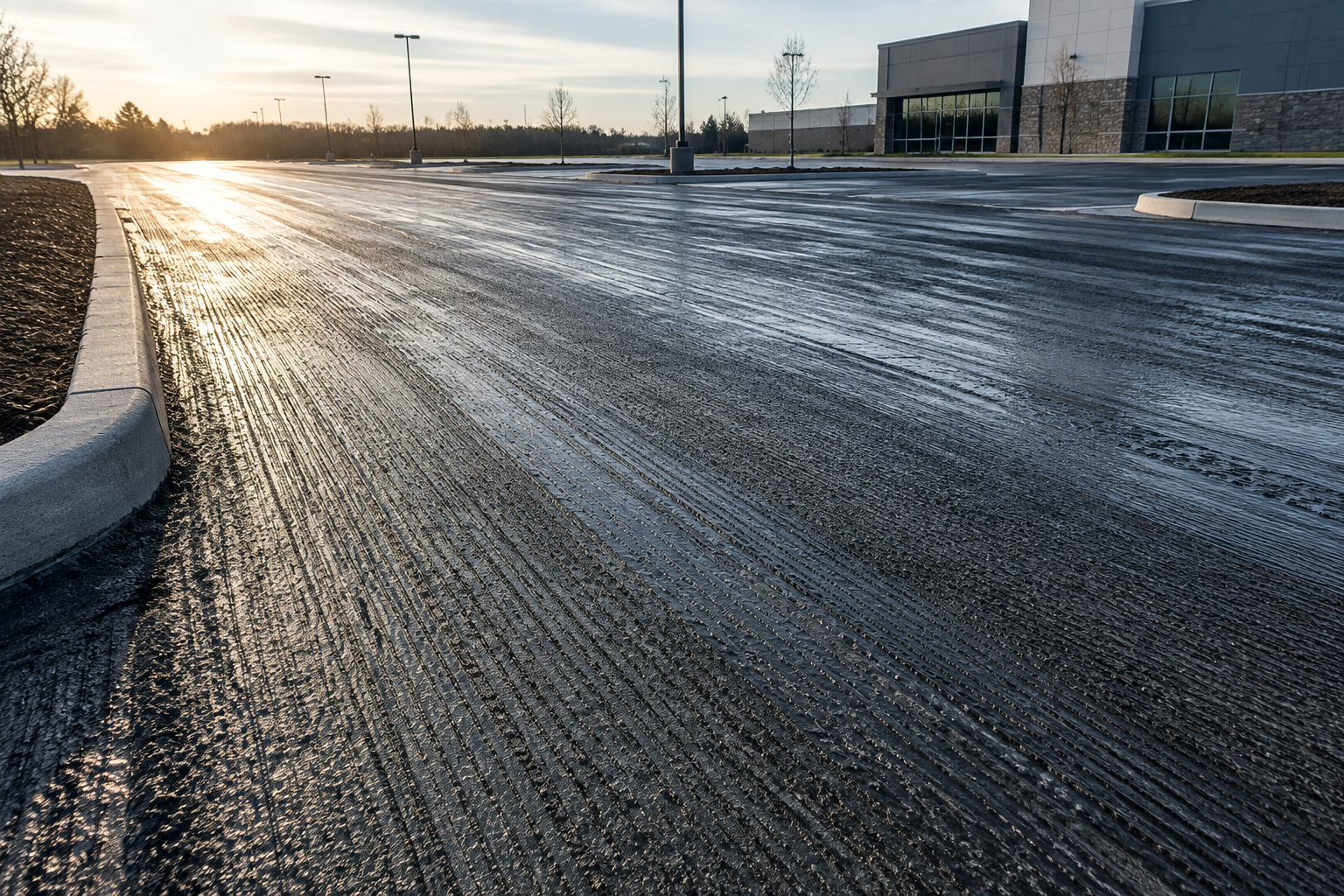
Resurfacing is the middle option between patching and reconstruction. It is worth doing when the asphalt is worn and cracked but the structure underneath is still doing its job. It is wasted money when the base is moving, because the new layer takes on the shape of whatever is beneath it.
What the scope covers
Resurfacing starts with preparation. The existing surface is cleaned, failed areas are cut out and rebuilt, and where the surface is thick, uneven or already built up from previous work, part of it is milled to bring the finished elevations back into line with curbs, islands, doors and basins. The prepared surface is tack coated so the new layer bonds to it rather than sitting on top as a separate sheet.
The overlay is then placed and rolled. Catch basin frames, covers and aprons are adjusted to the new surface height, because a basin left at the old elevation becomes the low spot it was never meant to be. Striping is laid out again afterwards, which is also the point where a layout can be improved rather than copied.
- Cleaning and preparation of the existing surface
- Localized repairs cut out and rebuilt
- Milling where elevations or buildup require it
- Tack coat and overlay placed and compacted
- Basins, frames and aprons adjusted to the new height
- Striping layout and paint on the finished surface
Overlay or reconstruction
This is the decision worth getting right. An overlay fits when the base is stable, the lot drains and the failures are surface level: weathering, surface cracking, fading, raveling. A reconstruction fits when the failures are structural: alligator cracking through wheel paths, pumping under load, settled areas that hold water, or a base that has been saturated for years.
Where the answer is not clear from the surface, the honest step is to look at what is underneath in a small area before committing the whole lot. A patch that has failed twice in the same place is telling you something, and overlaying it a third time will not change the message.
Working around an occupied lot
Resurfacing is phased so the property keeps working. One section is prepared, overlaid and reopened before the next begins, with a marked route through the lot and accessible parking kept near the building. Because a new overlay needs to cool before traffic, the section that is finished last in a day is often the one that stays closed overnight.
Ottawa freeze-thaw and drainage
An overlay inherits the drainage of the lot beneath it. If the old surface held a puddle in the same spot every spring, the new surface will hold it too unless the low spot is corrected during preparation. That correction is part of the planning, not an extra discovered halfway through the work.
Freeze-thaw also means cracks in the old surface should be sealed before the overlay, not covered over. A crack that is still able to move will telegraph through the new layer.
When to schedule
Overlay work follows the same window as paving: warmer months, a dry base and hot mix placed and rolled inside a workable temperature range. If a lot is going to be resurfaced, the planning is best done early in the year so the work lands in the season rather than at the end of it.
Resurfacing questions
In practice the terms are used together. Resurfacing means putting a new asphalt surface over the existing one, and an overlay is that new layer. Where the existing surface is thick, uneven or already has several layers, part of it may be milled first so the finished elevations still work with curbs, basins and doors.
It depends on the base. If the asphalt is worn and cracked but the base is stable and drains, an overlay is a reasonable path. If the surface is breaking up in the same places repeatedly, or water is sitting under the pavement, an overlay carries the problem forward and reconstruction is the honest answer.
No. Resurfacing is usually phased by section, with a route kept open and accessible stalls kept near the entrances. Where a section needs to cure without traffic, that work moves to after hours or a weekend so tenant traffic is not cut off.
They are adjusted. A new layer raises the surface, so basin frames, covers and aprons have to be brought up to the new elevation. If a basin has settled or its apron has broken, that repair belongs in this scope rather than in a separate visit next year.
No. Failed areas are cut out and rebuilt before the overlay goes down, otherwise the new surface reflects the movement underneath within a season. The extent of that repair is decided during the site walk and written into the scope.
Start a resurfacing project
Tell us how the lot is failing and where. That is usually enough to know whether the conversation is about an overlay or a rebuild.
Or email
info@commercialpavingottawa.com