Service 08 / Drainage
Catch basin and drainage repair in Ottawa
Sunken basins, broken aprons and low spots corrected so water reaches the drain and leaves the lot.
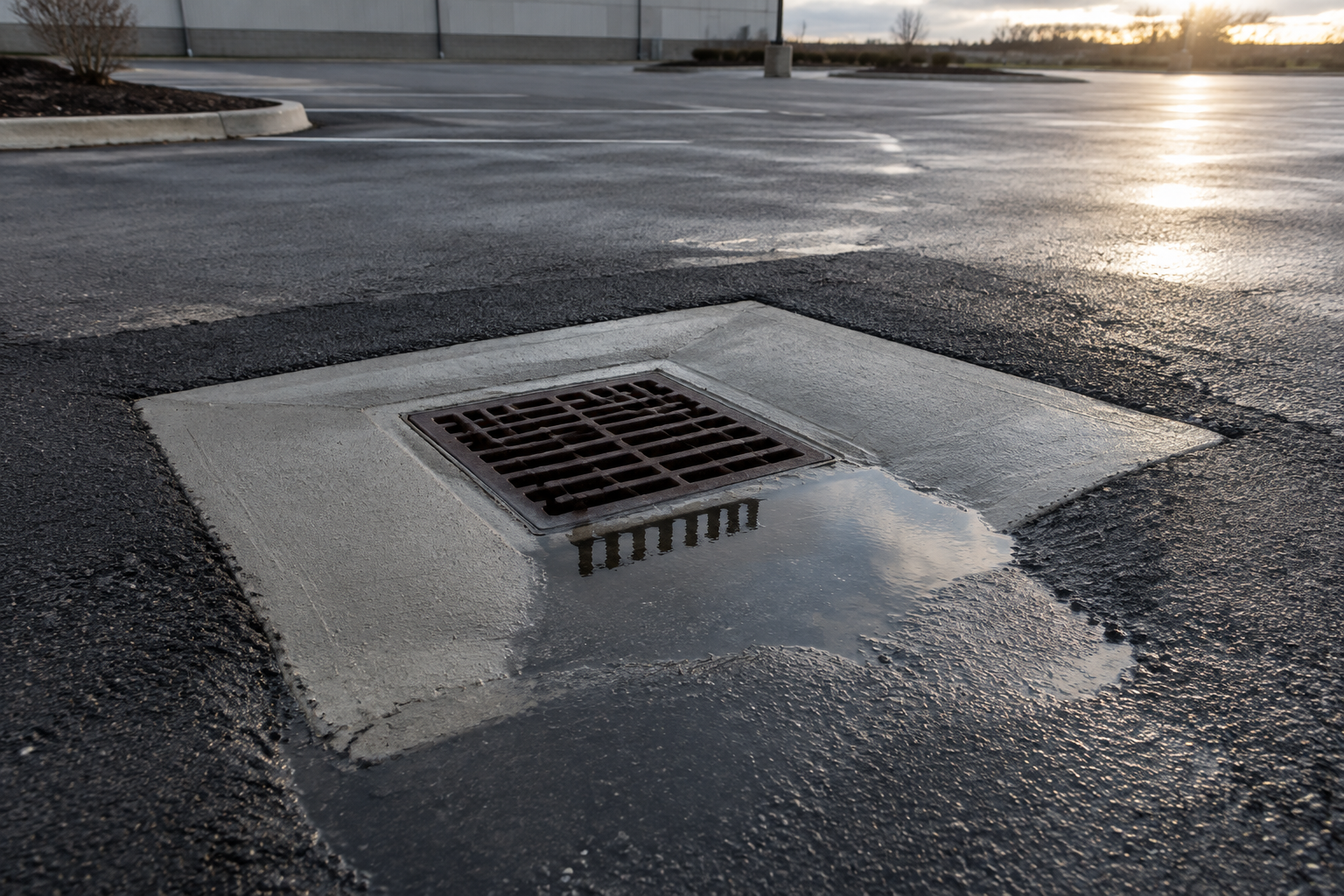
Water that cannot leave a lot does not sit quietly. It works its way into the asphalt, reaches the base, and comes back the following winter through every crack and joint it can find. Drainage repair is where a lot either keeps working or starts a cycle of patching that never ends.
What is included
The work starts with the basin itself. A frame that has settled below the pavement is lifted back to the elevation the surface needs. A broken or spalled concrete apron is removed and rebuilt, because a broken apron lets water run under the asphalt instead of into the drain.
The pavement around the basin is then restored, with the fall adjusted so water arrives at the grate from the drive aisle and the stall rows rather than pooling a metre away. Where the surrounding asphalt has settled into a depression, that area is repaired as part of the same scope.
- Sunken basin frames and covers reset to elevation
- Broken or spalled concrete aprons removed and rebuilt
- Pavement restored around the basin to the correct fall
- Localized low spots corrected where water stands
- Grates checked and the basin left clear at handover
How the work is planned
Drainage repairs are localized, which makes them easier to fit into an occupied lot. The area around the basin is barricaded while the apron is rebuilt and the asphalt restored, and the rest of the lot stays in use. Where the basin sits in a main drive lane, the work is scheduled after hours or early in the morning.
If several basins have failed in the same way, that is a sign the problem is the lot grade rather than the basins themselves. In that case the scope is planned around the fall of the lot, not around each basin as a separate repair.
Ottawa freeze-thaw at the basin
The basin edge is one of the hardest points in a lot. Concrete and asphalt meet there, water collects there, and plow blades pass over it all winter. Freeze-thaw works at the joint, and once the apron breaks, water goes under the surrounding pavement and the asphalt settles around the frame.
That is why a basin repair that only replaces the asphalt around a sunken frame does not last. The apron and the elevation have to be corrected with it.
What the scope does not cover
Our work is on the property side: the basin structure and cover, the apron, the lead within the lot, and the pavement around it. Anything beyond the property line, including the municipal main and the connection to it, is the municipality's responsibility. Where the lot drainage problem clearly sits beyond that line, we will say so.
When to schedule
Drainage repairs need a dry surface and temperatures above freezing, which makes the warmer months the practical window. Late winter and early spring are the best time to identify the problem, because standing water and settled basins are easiest to see after a thaw.
If a lot is going to be resurfaced or paved, the drainage work belongs in that scope. Bringing a basin up to a new surface height later is a second, smaller job that could have been part of the first.
Drainage questions
The frame sits below the surrounding asphalt, the concrete apron around it is cracked or broken away, water stands in the lot instead of draining, or the asphalt around the basin has settled into a depression. Any of those means the basin assembly and the pavement around it need attention.
Because getting water to the basin is a grade problem, not a cleaning problem. If the surface has settled or been patched, the fall may no longer lead to the low point. Rebuilding the basin and correcting the surrounding grade is what fixes it.
Usually, yes. The pavement around the basin is cut back, the frame and apron are reset to the correct elevation, and the asphalt is restored around it. The repair is local, and the surrounding fall is adjusted so water still reaches it.
Only the area being worked on. Drainage repairs are localized, so the section is closed while the basin and apron are rebuilt and reopened once the material has set. Accessible stalls and the main drive aisle are kept usable wherever the layout allows.
No. Our work is on the lot side: the basin, its frame and cover, the concrete apron, the lead within the property and the pavement around it. Anything beyond the property line is the responsibility of the municipality.
Start a drainage repair
Tell us where the water stands after a storm and which basins look wrong. Standing water is the earliest sign a lot grade has moved.
Or email
info@commercialpavingottawa.com