Service area 03
Asphalt paving in Nepean
Established plazas and commercial rows along Merivale, Baseline and Meadowlands, where the surface has a history of patches.
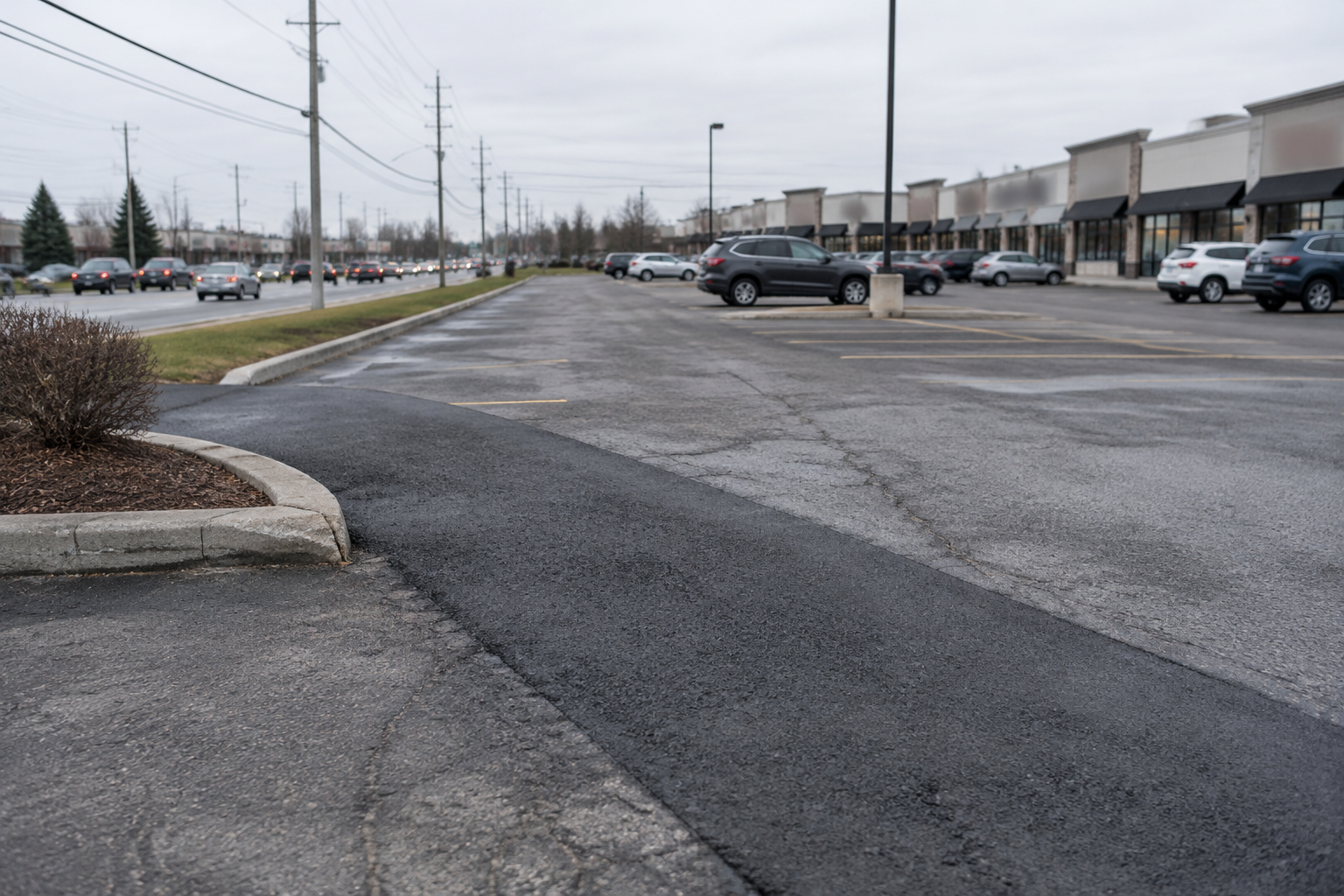
Nepean has a large stock of commercial lots that were built decades ago and have been maintained in small pieces ever since. That history shows in the pavement: a drive lane with four or five patches of different ages, a row of stalls where the surface has settled, and a catch basin that has been raised once and is now low again.
Reading a heavily patched lot
Patching is not a failure on its own. Isolated holes in an otherwise sound lot are normal maintenance. The pattern to look for is repetition in one place. If the same lane or the same corner keeps failing, the asphalt above it is not the problem, and the next patch will fail in the same way.
On these lots the practical question is where the boundary sits between continuing to patch and doing a broader repair. That boundary is usually the base: where it is intact, a cut out repair done properly holds; where it is saturated, an overlay or a rebuild of that section begins to be the cheaper answer over a few seasons.
Drainage on older lots
Older lots along Baseline and Meadowlands were built with a fall that has since been altered by years of patching. Patches sit slightly proud, settled areas sit slightly low, and the water that used to reach the basin now stops a metre short. When that happens the basin is clear and working, and the lot still holds water.
Correcting it means resetting the basin and apron to the elevation the surface needs and restoring the fall in the affected area. That work is small compared with repaving a lot, and it prevents the water from reaching the base in the first place.
Access and traffic
Nepean commercial lots tend to sit close to arterial roads, which makes the entrance the busiest and most constrained part of the property. Entrances are worked early in the morning or on a lighter traffic day, and never fully closed without a signed route through the lot.
Parking fields behind the plazas are more forgiving, and service lanes at the rear usually give a paver a workable run. Where a rear lane is narrow or shared with a garbage enclosure, that section is handled separately with smaller equipment.
What the winter does here
The combination of salt from the arterial road, plow traffic through the entrances and freeze-thaw at every patch edge is what shortens the life of these surfaces. The areas that suffer first are the entrance apron, the drive lane where vehicles turn into the stalls, and the edge of any patch that was not cut clean.
Sealing cracks before they open wide is the cheapest response, and doing it late in the season when the cracks have opened is the most effective time. On a lot that is already patched heavily, crack sealing at least stops the water from spreading from the existing failures.
Planning the work
Because these lots are in constant use, the plan is usually a mix of scopes across two or three seasons: drainage and repairs this year, an overlay on the worst field next year, sealcoat and striping after that. Setting that sequence out in writing is more useful than treating each spring's failures as a surprise.
Paving work still happens inside the warmer months, and the earlier in the year the scope is decided, the better the chance of getting the lot into the season rather than the following one.
Nepean lot questions
The plazas and commercial properties around Merivale Road, Baseline Road and Meadowlands Drive, plus the smaller retail rows and office lots in between. Most are established properties with a mix of original asphalt and several rounds of patching.
Because patching is the cheapest response to a failure, and it gets repeated whenever a new hole opens. Once the pattern shows up across a whole drive lane, the base under that lane is the real issue and a broader repair or an overlay starts to make more sense than another patch.
Yes. Accessible stalls are moved into the section that stays open, and the painted layout is restored at the end. On a plaza where the accessible stalls sit closest to the doors, that is planned before work begins rather than after.
Heavily used entrances are worked early in the morning or on a lower traffic day, and the entrance is never fully closed without a signed alternate route through the lot. That keeps the site accessible from the arterial road throughout.
Start a project in Nepean
Tell us how often the same areas fail. A repeat failure is a drainage or base question, and that is where the scope should start.
Or email
info@commercialpavingottawa.com