Service area 01
Asphalt paving in Orleans
Plaza lots along Innes and Tenth Line, the shopping centre lots, and a retail corridor that cannot afford to lose its drive aisle.
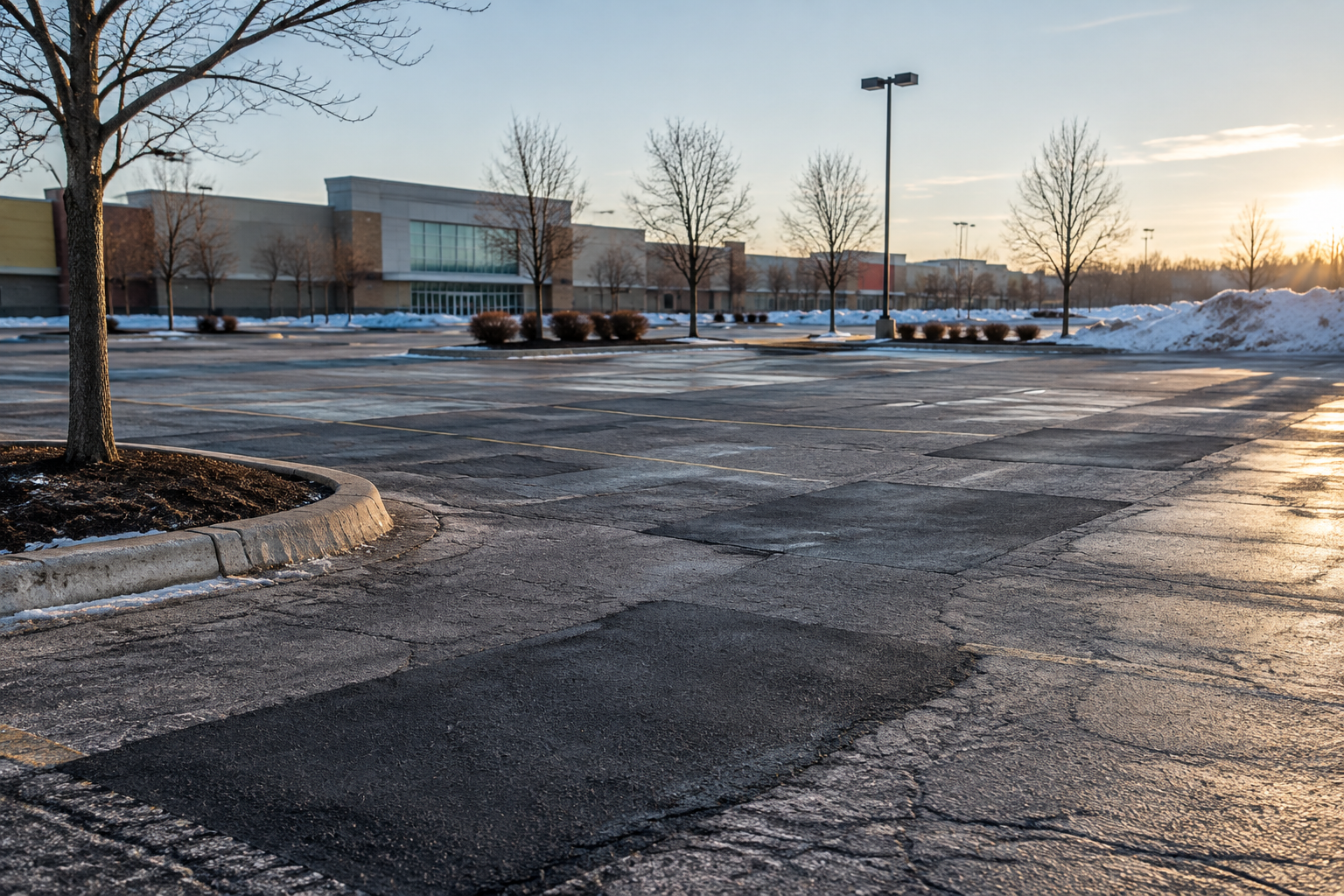
Asphalt paving Orleans work is mostly about retail lots that stay busy. The commercial strip along Innes Road and the plaza lots around Tenth Line were built for car traffic and delivery trucks, and most of them are now old enough that the surface is showing it: patched wheel paths, settled stall edges, and catch basins that no longer sit where the asphalt does.
What the lots here look like
The typical property is a plaza with a long drive aisle in front of the units, angled or perpendicular stalls against the storefronts, a service lane behind for deliveries and a garbage enclosure at one end. The shopping centre lots are larger and more open, with wide parking fields and long rows, which makes them easier to phase but harder to close because they serve so many visitors at once.
Both types share the same weak points: the drive aisle where turning trucks work the surface, the entrance where road salt comes in, and the edge of every catch basin apron.
Truck access and phasing
Access in Orleans is generally generous compared with the older parts of the city. There is usually room to bring a paver and a roller in from the rear service lane, and enough space on the lot to stage material without blocking a fire route. The constraint is not physical room, it is the tenant mix: a plaza with a grocery anchor cannot lose the stalls closest to its doors for long.
That is why most work here is phased by row, with a marked route kept open and accessible stalls relocated to the section that stays in service. Where a fresh mat needs to cure without vehicles on it, that stage is scheduled overnight and the section reopens for the morning.
Drainage and the freeze-thaw cycle
East end lots take a full winter of plowing, salt and freeze-thaw. The pattern that shows up most often is a low spot in the drive aisle where water stands after a thaw, usually where a basin has settled a few centimetres or where a utility repair was patched without resetting the grade around it. Water that stands in a drive aisle reaches the base under the asphalt, and the failure starts there rather than at the surface.
Correcting that is a matter of resetting the basin and apron to the right elevation and restoring the fall around it, so the water arrives at the grate instead of a metre short of it.
Repair or resurface
Many Orleans lots sit in the middle of that decision. The surface is worn and cracking but the base is still doing its job, which makes an overlay a reasonable path once the failed areas are cut out and the basins are adjusted. Where the wheel paths have alligator cracked through to a failing base, overlaying only postpones the rebuild, and it is worth saying so plainly.
Planning the season
Paving in Orleans follows the same window as everywhere in the city: the warmer months, with the work scheduled so the mix is placed and rolled inside a workable temperature range. The practical approach is to walk the lot in spring, decide the scope, and lock the work into the season early. A lot that is assessed in July is usually a lot that gets paved the following year.
Striping is the last step, after the surface has cooled and cured enough to take paint, which is also the moment to review the stall layout. Plazas that were striped for one tenant mix and now serve another often gain usable stalls in that review.
Orleans lot questions
Yes. Those retail plazas are the most common lot type we see in Orleans. They are busy through the day and depend on the drive aisle in front of the units, so the work is phased by section and often run early in the morning or after closing.
The lot does not have to close all at once. It is planned section by section so a route stays open and accessible stalls stay near the entrances. Where a section has to cure without traffic, that stage is scheduled outside shopping hours.
Usually because settlement and patching have changed the fall the lot was built with, so water no longer reaches the catch basin in the time it should. Correcting the fall and the basin elevation is part of the repair, not a separate problem.
The same as the rest of Ottawa: the warmer months, when hot mix can be produced and rolled within a workable temperature range and the base is dry. Spring is the better time to assess the lot and book the season's work.
Start a project in Orleans
Tell us which plaza or building and how the lot is used. Delivery times and anchor tenants shape the schedule more than the area does.
Or email
info@commercialpavingottawa.com