Service area 09
Asphalt paving in Cumberland
East end commercial and rural edge properties with wider yards, heavier vehicles and more room to work.
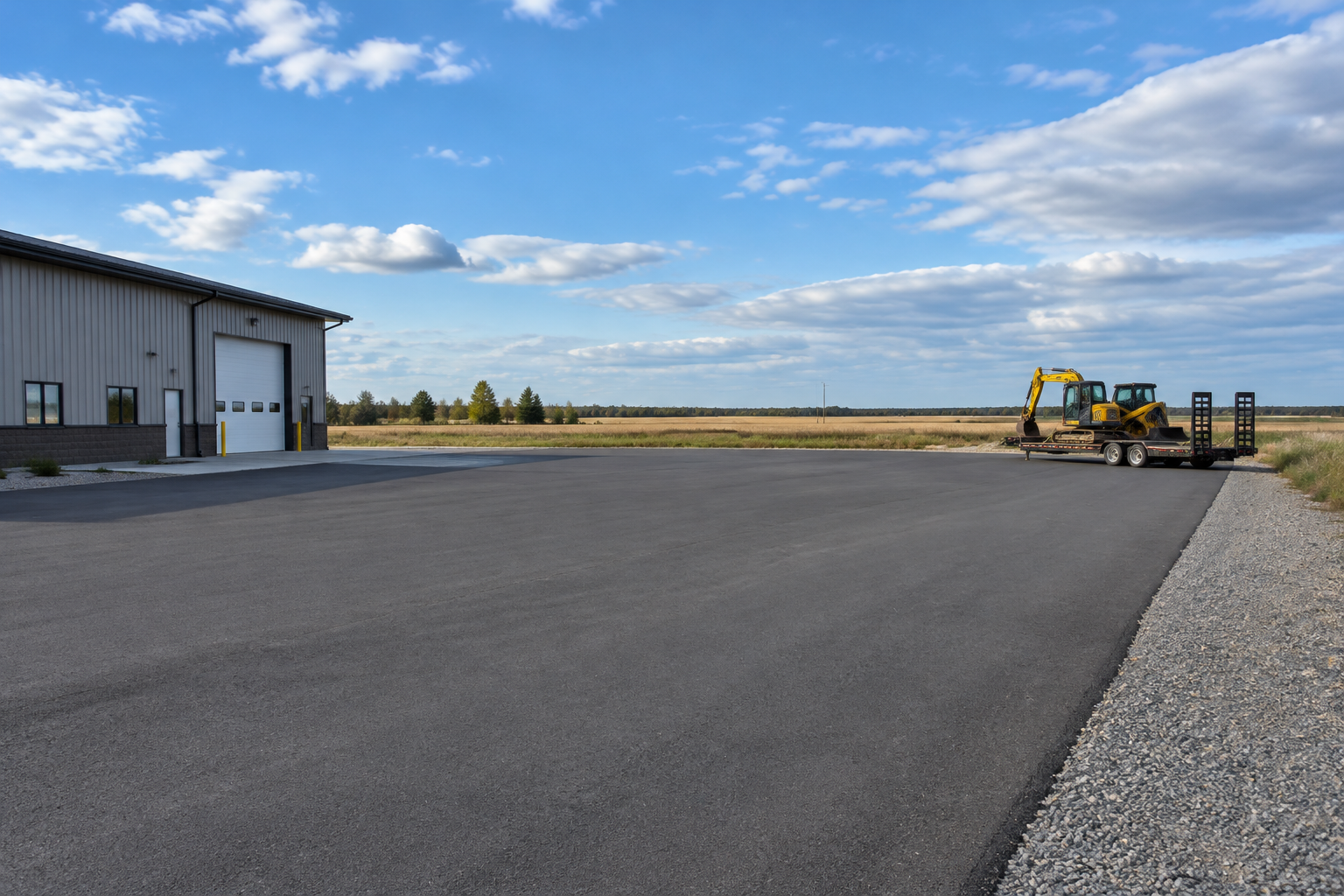
Cumberland is where the city thins out. Commercial properties here tend to have wider yards, buildings set further back, and a gravel shoulder somewhere on the site. That extra room makes the work easier in one way and introduces problems that a city lot never has.
Yards rather than parking fields
A commercial yard carries different loads from a parking lot. Equipment moves across it, trailers are parked and turned on it, and materials are stored on it. That means the base has to be designed for heavier traffic, and the turning areas in particular need the most attention, because a loaded vehicle turning slowly does more damage than anything else on the site.
Gravel transitions
The other local issue is where asphalt meets gravel. An edge that is left unfastened will break away, and once it does, water gets in along the boundary and the failure works its way inward. The edge is prepared, contained and, where the site allows, held with a curb or a thickened asphalt shoulder so there is something for the surface to key into.
That detail is easy to skip and expensive to fix later. On a rural edge property it is often the difference between a yard that lasts and a yard that is patched along its edges every few years.
Drainage with room to work
On these sites drainage is often handled by the site's own fall and a ditch rather than a full storm connection. That makes the grade more important, not less: water has to leave the paved area and reach the ditch without eroding the gravel transition on the way. Where a ditch has silted up or the fall has been altered by grading work, water sits on the pavement instead.
Access and equipment
This is the easy part of working in Cumberland. Full sized equipment can get in, material can be staged on site, and a paver can make long runs without the stop and start of a city lot. That usually means the work is completed faster and with fewer stages than an equivalent area in the built up part of the city.
Scheduling around the property
Where a property has a busy season, the paving is scheduled outside it. That is a real constraint on agricultural and shipping related sites, and it is worth setting the dates around the property's own calendar rather than the paving season alone.
The season itself is unchanged: warmer months for hot mix, with the base dry before placement. Winter is the time to look at the yard, note where it has rutted or held water, and plan the scope so the work can be booked as soon as the season opens.
Cumberland lot questions
Yes. Yards, aprons and parking areas on commercial and light industrial properties east of the built up area are part of the work. Those sites usually have generous space, which makes them easier to work than a city lot.
The gravel edge has to be prepared and contained, or the asphalt will break away along it. That means a defined edge, a compacted granular transition and, where the site allows, a curb or a thickened asphalt edge to hold the boundary.
It does. A yard carrying loaded trucks needs a thicker, better compacted base than a car park, and the turning areas take the most load. The design follows the traffic rather than a default thickness.
Yes, and it usually should be. Where a property has a busy period, the paving is scheduled outside it so the yard stays usable through the weeks it matters most.
Start a project in Cumberland
Tell us what drives across the yard and where it meets gravel. Those two details decide most of the build.
Or email
info@commercialpavingottawa.com