Service area 06
Asphalt paving in downtown Ottawa
Small, tightly built lots between buildings, where access is the plan and the work happens when the lot is empty.
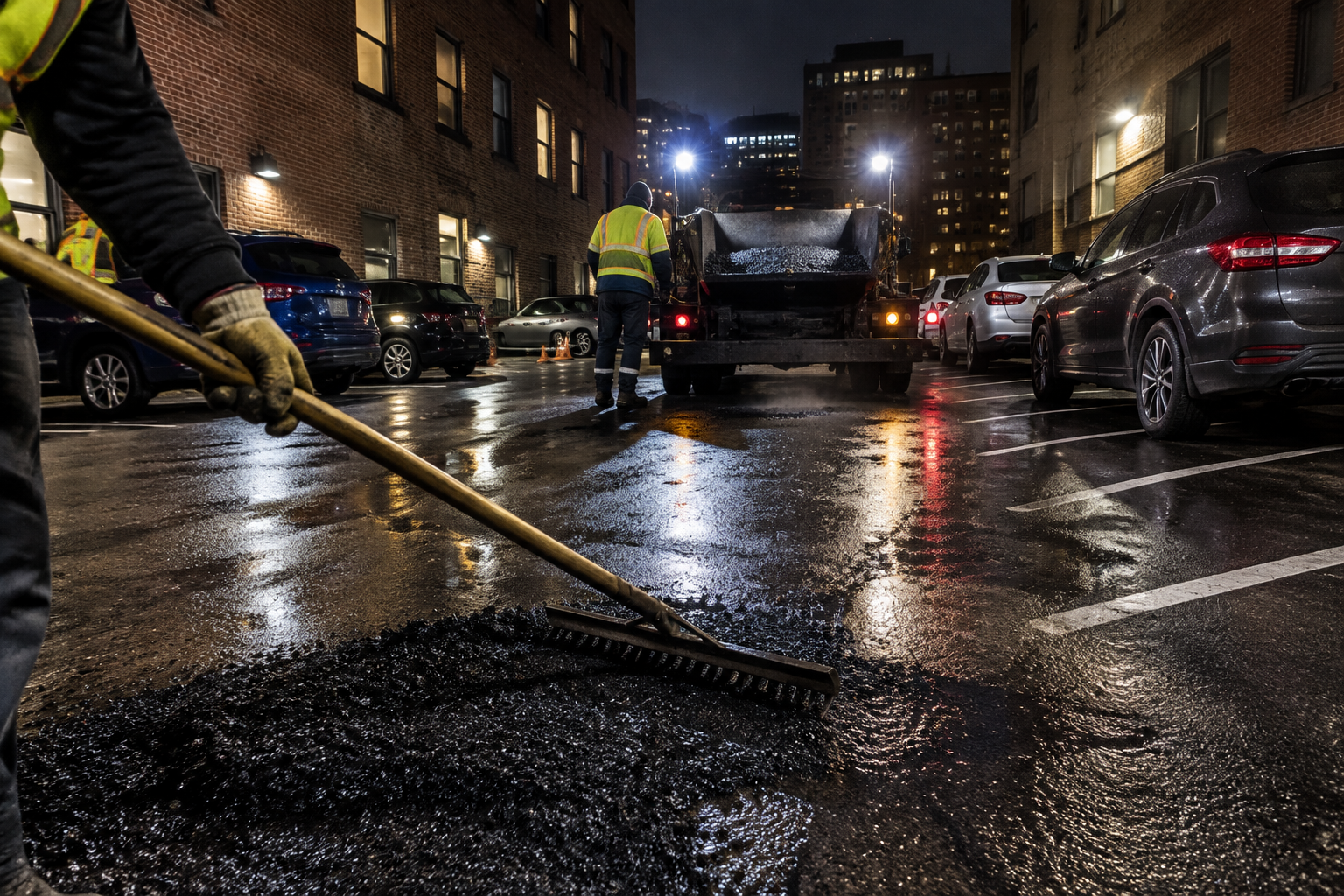
Paving a downtown lot is a different discipline from paving a suburban field. There is no room to stockpile material, no second entrance to keep traffic moving, and usually no possibility of bringing full sized equipment in during business hours. The scope is small and the planning is not.
What these lots look like
Centretown and the surrounding downtown blocks have small commercial lots set between buildings, sometimes reached through a laneway and sometimes from a single street entry. Stalls are often angled, drive aisles are narrow, and the boundary with the neighbouring property is a wall rather than a curb. Storm drainage frequently runs to a single basin at the low corner.
That geometry concentrates everything. One entry takes all the turning and all the salt from the street. One drain takes all the water. One laneway carries every delivery and every garbage pickup. The parts of the lot that fail are usually the ones the lot cannot function without.
Access and equipment
Equipment has to suit the space. On a lot reached through a laneway, the plan starts with what can physically get in and turn around. That may mean a smaller paver, a smaller roller, or a repair approach that does not require a full paving train. Material arrives as it is needed rather than being staged on site, because there is nowhere to stage it.
Where a lot can only be entered from one side, the work is sequenced so the exit stays clear and so a lane is never blocked for longer than the stage requires.
After hours and phased work
Downtown lots are usually full during the day and empty at night, which makes night work the practical option. The quieter stages go into the night window, the noisier ones to the earliest morning slot, and the work is planned within what the site and the surrounding area allow.
Where a lot serves a building with overnight activity, the work is split into phases that leave a usable area at all times, even if that means more stages with a smaller footprint.
Drainage in a tight lot
A small lot has no room for water to go anywhere except the basin. If the basin has settled or the apron has broken, the low corner floods and the asphalt around it breaks up. Fixing that means resetting the basin, rebuilding the apron and restoring the fall, all inside a confined area with limited access.
It is not glamorous work, but it is the difference between a lot that drains and a lot that turns into ice in the same corner every winter.
Scope and season
Most downtown work is a repair, a drainage correction, a targeted overlay or a striping and sealcoat program rather than full reconstruction, because the base under a downtown lot is usually confined by structures and not easily rebuilt. Where a full rebuild is needed, that is planned well ahead with the property and the adjacent users in mind.
The season is the same as the rest of the city: warmer months for anything involving hot mix, with the schedule built around the lot's own patterns rather than a standard working day.
Downtown lot questions
Rarely without disruption. Most downtown and Centretown lots are worked at night or in the early morning, when the lot is empty and the laneway or street access is clear. The work is planned around the hours the lot is actually full.
Material is brought in as it is needed rather than stockpiled on site. Equipment is sized for the space, and the sequence is short enough that a lane or entry is not blocked for long. That is a scheduling plan rather than a larger work area.
Night work is planned within what the property and the surrounding area allow. Where a stage is too noisy for the hour, it moves to the earliest morning slot instead, and the quieter stages are placed at night.
Because that is where the tightest turning happens and where water arrives from the street. A small lot with a single entry concentrates all the turning, braking and salt in one place, so the entry apron and the first few metres inside it take far more wear than the rest.
Start a project downtown
Tell us how vehicles get in and out, and when the lot is empty. Access decides the plan before the scope does.
Or email
info@commercialpavingottawa.com